French
  Deutsch
  Spanish
  الإمارات
  English
 A scarf may seem like a small accessory, but it has the power to completely transform your outfit. Whether you’re dressing for the office, a formal event, a casual day out, or a chilly winter evening, the right scarf can tie everything together—literally and visually. The trick is knowing which scarf works best with which outfit and season.
Let’s make it simple and stylish.
Why the Right Scarf Can Transform Any Look
Fashion Meets Function
Scarves aren’t just about warmth. They add color, texture, and personality to an outfit while serving a practical purpose.
The Power of Accessories
Think of a scarf as the finishing touch. Like seasoning in food, the right amount elevates the entire look.
Key Factors to Consider When Choosing a Scarf
Fabric
Fabric determines comfort and seasonality. Lightweight fabrics work for summer, while thicker materials are best for winter.
Length & Size
Short scarves look neat and professional. Longer scarves add drama and layering options.
Color & Pattern
Neutral scarves are versatile. Bold prints make a statement when paired with simple outfits.
Dressing Specific Garments: A Pattern-by-Pattern Approach
Black Dresses: From Formal to Casual
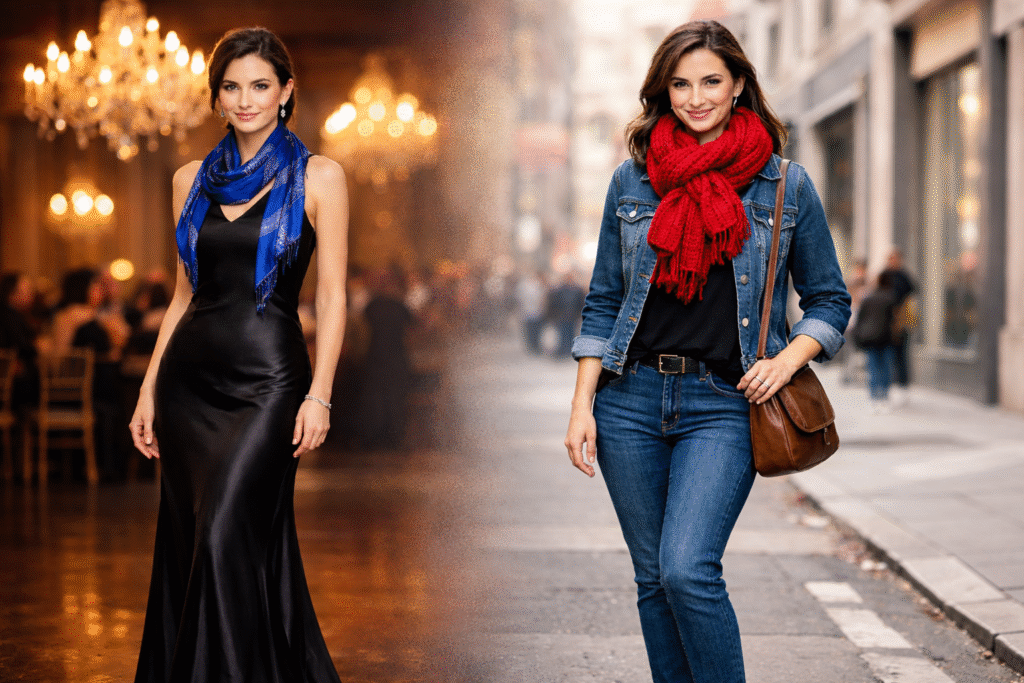
Black dresses present a unique styling paradox—their neutrality demands intentional scarf selection to either amplify sophistication or inject visual interest. For formal occasions (gala events, black-tie receptions), silk or satin scarves with metallic accents, jewel tones, or delicate prints serve as elegant additions without violating formal convention. The lightweight nature of these materials prevents the outfit from feeling heavy, while the scarf functions as jewelry rather than practical outerwear. Silk scarves in silver, burgundy, or sapphire create distinction while maintaining the formality hierarchy.
Casual black dresses benefit from bolder scarf strategies. A black dress worn with jeans or flats gains immediate vitality from statement-making scarves in red, emerald, or patterned designs. The scarf here becomes the primary visual anchor, permitting larger prints, textured knits, and chunky materials that would overwhelm formal contexts. Cotton, jersey, or lightweight knit scarves create an accessible, relatable aesthetic when paired with casual black dresses, whereas silk or faux fur scarves add texture and intrigue to basic black dresses worn with denim jackets or leather jackets.
Casual Dresses
For casual dresses, choose lightweight scarves like cotton or viscose. Soft prints or pastel shades work beautifully.
Formal Dresses
With formal dresses, opt for silk, satin, or fine wool scarves. Keep patterns minimal and colors elegant.
Black Coats: The Foundation of Contrast
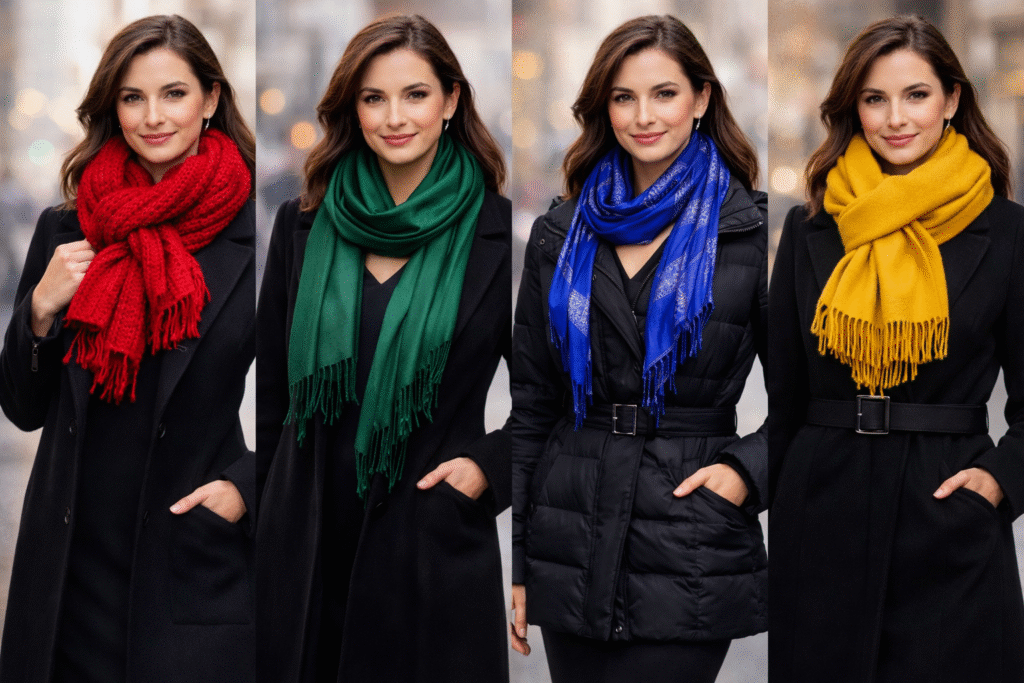
Black coats function as blank canvases permitting virtually unlimited scarf color experimentation. Unlike colored coats that constrain possibilities, black’s visual neutrality welcomes complementary colors (opposite on the color wheel), analogous colors (harmonious and adjacent), and bold statement colors without aesthetic conflict. A red or burgundy scarf against a black coat creates sophisticated contrast, as does a deep emerald, sapphire, or mustard yellow. This flexibility makes black coats ideal for experimenting with scarves, as incorrect color choices remain far less consequential than with colored outerwear.
The primary consideration shifts from color to material and drape. Oversized wool scarves can be dramatically draped or belted at the waist for evening impact, while silk scarves worn as classic drapes or loops serve daytime professional contexts. The coat’s structure—whether tailored wool coat or casual puffer jacket—determines fabric appropriateness.
Long Coats and Trench Coats: Proportion and Elegance
Long coats and trench coats operate under distinct styling principles than shorter jackets, primarily due to their formal structure and extended silhouette. Trench coats specifically demand lightweight scarves—silk, cashmere, or fine cotton—to maintain the coat’s sleek, organized aesthetic. These materials drape cleanly, avoiding the visual bulk that would contradict the trench coat’s tailored sophistication.
Styling approaches vary by proportional goals. Wrapping the scarf once and letting ends hang creates an elegant, understated effect appropriate for professional contexts or daytime wear. The classic wrapped-and-draped technique, where the scarf winds around the neck once then drapes loosely down the front, suits both casual and business-casual presentations. For shorter individuals, proportion-conscious dressing requires avoiding scarves that compete visually with the coat’s commanding length; instead, monochromatic or minimal-contrast scarves maintain vertical continuity.
Color-blocking opportunities abound with neutral-toned long coats. A camel-colored trench coat pairs beautifully with jewel-toned scarves (emerald, burgundy, sapphire) or earth tones (rust, olive, mustard), whereas gray long coats welcome warm colors (coral, peach, orange) or cool jewel tones depending on personal preference.
Black Coat
A black coat pairs well with almost any scarf. Try plaid, checks, or textured knits for contrast.
Long Coat
Long coats look best with long scarves. Wool or cashmere scarves in solid colors add sophistication.
Trench Coat
For trench coats, lightweight wool or silk scarves work best. Neutral tones or subtle prints enhance the classic look.
Suit Jackets and Blazers: Professional Polish
Suit jackets and blazers benefit from scarf styling that adds visual interest without compromising professional formality. The silk square scarf emerged historically as the quintessential business accessory, capable of ten or more distinct styling variations ranging from simple loops to elaborate neckties. A rectangular scarf folded into a narrow band and tied as a necktie-style cravat creates instant professional polish, working particularly well with button-down shirts worn under blazers. This technique frames the face while demonstrating intentional style choices valued in executive contexts.

For business-casual settings, square silk scarves tucked neatly into the blazer’s neckline—allowing only a portion of the pattern to show—add color and pattern without appearing theatrical. Fine wool scarves in solid colors or subtle prints serve identical functions when silk feels inappropriate to organizational culture. The critical principle involves proportional restraint: the scarf should occupy the neck and upper chest area without overwhelming the face or extending aggressively beyond the blazer’s boundaries.
Colors warrant careful selection. Neutral tones (gray, burgundy, navy), solids, and minimal prints maintain professional gravitas. Patterned scarves work effectively when one color in the pattern repeats elsewhere in the outfit (belt, shoes, jewelry), creating intentional coordination that signals thoughtful dressing.
Choosing a Scarf for Suit Jackets
Business & Formal Suits
Keep it clean and structured. Choose fine wool or silk scarves in muted shades like navy, grey, or beige.
Semi-Formal Styling
You can experiment slightly with patterns—thin stripes or micro prints work well.
Scarf Styling with a Blazer
Office-Ready Looks
For office wear, go for lightweight scarves tucked neatly inside the blazer. Avoid bulky styles.
Smart Casual Outfits
Drape a soft scarf loosely over a blazer for a relaxed yet polished appearance.
Jeans and Top Combinations: Casual Elevation
Casual jeans-and-top ensembles gain surprising sophistication through scarf addition, transforming basic combinations into intentional, polished looks. The styling approach differs markedly from formal contexts, embracing experimentation with color, pattern, and material. A plain white t-shirt and blue jeans become fashion-forward when paired with a patterned cotton scarf in complementary colors, or a simple black and white striped scarf adds definition to an otherwise minimal palette.
Practical styling for casual wear includes wrapping the scarf loosely around the neck and letting both ends hang—this casual, effortless approach suits the context perfectly. Alternatively, scarves can be threaded through belt loops on jeans and tied at the front, functioning simultaneously as color accent and waist-defining element. This technique prevents the scarf from appearing formally overdone while maintaining visual interest through unexpected placement.
Material selection permits greater freedom in casual contexts. Cotton, jersey, linen, and lightweight wool blends work equally well, with choice driven more by season and personal preference than rigid styling rules. Patterned scarves shine in casual settings—florals, geometric prints, stripes, and bold color combinations create personality that formal contexts would find excessive.
Casual Everyday Looks
This is where you can have fun. Cotton, linen, or printed scarves add personality to simple outfits.
Chic Street Style
Oversized scarves or bold patterns instantly upgrade jeans-and-top combinations.
Corporate and Office Wear: Professional Formality
Office environments demand scarf selections that read as intentional and professional without straying into theatrical or trendy territory. The foundation rule requires structured scarves—avoiding fringed edges, excessive bulk, or novelty textures. Square silk scarves in classic patterns (subtle florals, stripes, geometric designs) or solid colors function as the professional gold standard.
Evening Events
Silk, satin, or embellished scarves work best. Keep it elegant and avoid heavy textures.
Minimal vs Statement Scarves
If the outfit is detailed, go minimal. If it’s simple, let the scarf be the star.
Styling techniques emphasize neatness and intentionality. A small square scarf folded into a narrow band and tied as an ascot beneath a collared white shirt creates polished elegance, appropriate for client meetings or formal office presentations. For blazer-based outfits, tucking the scarf neatly into the neckline or collar creates a finished look without introducing visual chaos. The color palette should remain fairly neutral or muted—navy, burgundy, gray, cream, black—while permitting subtle pattern or tonal variation that distinguishes the look from corporate sameness without appearing bold or attention-seeking.
A practical office-specific principle involves limiting the outfit’s main colors to no more than three to prevent a fragmented appearance that suggests poor coordination rather than intentional styling. The scarf should harmonize with existing elements rather than introduce competing visual interests
Final Styling Tips
Always match your scarf to the outfit, the occasion, and the season. A well-chosen scarf doesn’t just complete your look—it elevates it.
Choosing the perfect scarf isn’t complicated once you know the basics. From black dresses and trench coats to office wear and casual jeans, there’s a scarf for every outfit and every season. Focus on fabric, color, and proportion, and you’ll always step out looking effortlessly stylish—summer or winter.