French
  Deutsch
  Spanish
  الإمارات
  English
 Choosing the perfect scarf isn’t just about style—it’s about comfort, weather, functionality, and fabric. Whether you’re stepping out in the summer sun or shielding yourself from winter winds, the right scarf can make a big difference in your look and how you feel. Let’s break down what makes a scarf great for each season and help you pick the best ones.
Why Choosing the Right Scarf for the Season Matters
Comfort & Temperature Control
Ever worn a thick wool scarf on a hot day? Not fun. At the same time, a thin cotton scarf won’t keep a winter chill at bay. The right scarf protects you without making you uncomfortable.
Style Meets Function
Scarves can enhance outfits while serving practical purposes. The right choice keeps you stylish and comfortable year-round.
What Makes a Scarf “Summer-Friendly”?
Breathable Fabrics
Summer scarves need to let air flow so you don’t overheat. Breathable materials keep you cool.
Lightweight & Soft Materials
Heavy fabrics weigh you down. Summer scarves should feel light on the skin.
Popular Summer Scarf Styles
Think airy, breezy shapes—loose wraps, lightweight neck scarves, bandanas, and shawls you can easily fold or tie without bulk.
Best Scarf Fabrics for Summer: Prioritizing Breathability
Cotton: The Gold Standard
Cotton represents the most practical and popular choice for summer scarves. The natural fiber’s exceptional breathability prevents overheating while absorbing moisture effectively, making it ideal for hot, humid climates like northern India’s summers. Beyond functional benefits, cotton scarves offer health advantages—the fabric keeps skin cool and breathing while preventing sun rays from damaging exposed skin. Cotton naturally retains vital nutrients that would otherwise evaporate with heat exposure.
Cotton’s versatility enables diverse weight options. Lightweight cotton creates delicate, barely-there scarves perfect for purely aesthetic purposes, while heavier cotton blends provide additional coverage without trapping heat. At ₹200-800 retail in the Indian market and $5-15 wholesale, cotton represents the most accessible seasonal option for your textile business.
Linen: Premium Breathable Alternative
Linen provides superior breathability compared to cotton and dries significantly faster after moisture absorption. The flax-based fabric offers more sophisticated appearance with crisp texture, though it wrinkles easily—a trade-off many accept for its elegant aesthetic. Linen remains cool and comfortable in extreme heat while maintaining stronger tensile strength than cotton.
Silk (Lightweight): Luxury Summer Choice
Lightweight silk scarves offer the highest aesthetic value for summer styling. Despite common misconception, thin silk maintains excellent breathability while providing natural temperature regulation—staying cool in summer heat while retaining adequate coverage. Silk’s inherent sheen and elegant drape elevate even casual summer outfits. The versatility allows styling as neck wraps, wrist accessories, or bag charms.
Chiffon and Voile: Decorative Lightweight Options
Chiffon delivers sheer, delicate fabric suitable for beach settings and dressy occasions, though offering minimal functional warmth—purely aesthetic coverage. Voile blends cotton and synthetic fibers, creating light, slightly transparent material with better structure than pure chiffon, making it practical for beach cover-ups.
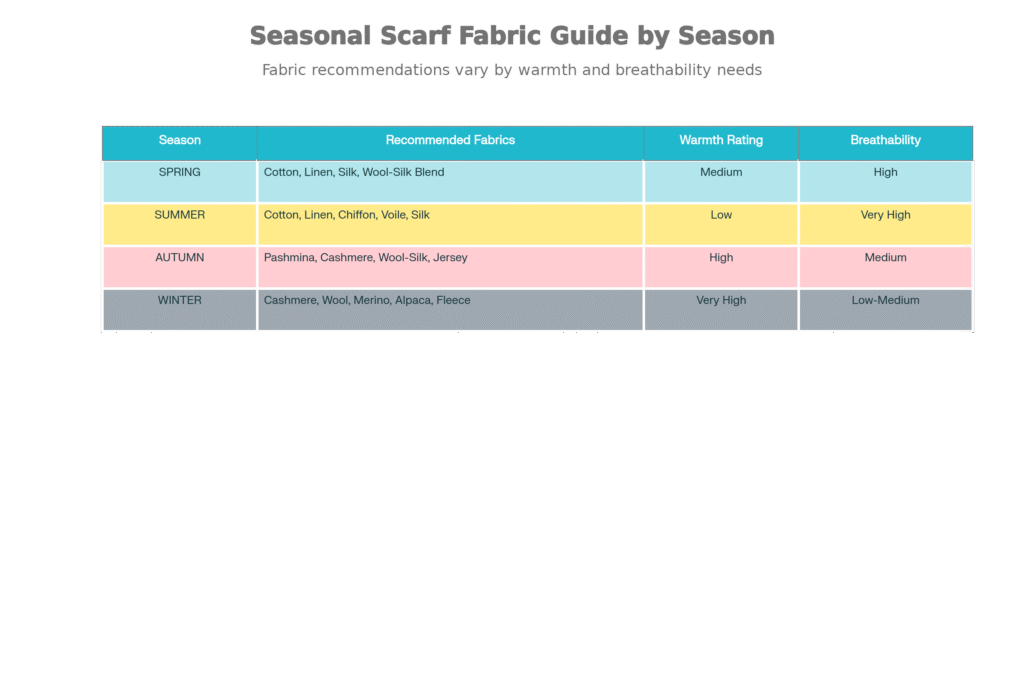
Best Scarf Materials by Season: Warmth, Breathability, and Styling Guide
What Makes a Scarf “Winter-Ready”?
Insulation & Warmth
Winter scarves must trap heat. Thick, dense fibers are key.
Weight & Texture
Winter scarves are heavier and cozier. Think plush, textured knits and soft wool.
Cozy Looks vs Practical Warmth
While style is important, winter scarves must first keep you warm—so don’t sacrifice insulation for fashion.
Best Scarf Fabrics for Winter: Maximizing Insulation
Cashmere: Premium Winter Standard
Cashmere emerges as the superior winter choice, delivering warmth exceeding most materials of equivalent thickness. The Kashmir goat fiber provides exceptional comfort for all-day wear without the scratchy sensation associated with coarser wool. Critically, cashmere’s natural temperature-regulating properties prevent overheating even in indoor settings—unlike wool which can feel uncomfortable when moving between cold outdoor and warm indoor environments.
High-quality cashmere commands premium pricing ($95-1,050 retail), but represents genuine long-term investment. Authentic cashmere with proper care lasts decades, with vintage cashmere pieces demonstrating durability superior to contemporary fast-fashion alternatives. Indian wholesale cashmere sources range from ₹15,000-25,000+ per piece depending on quality, offering substantial retail markup potential for luxury market segments.

Wool: Traditional Insulation
Wool remains the classic winter scarf material, naturally insulating and retaining heat while effectively repelling moisture. The fiber’s inherent properties make it long-lasting and durable across decades of wear. However, quality variation significantly impacts experience—coarser wool feels scratchy, while premium merino or blended alternatives deliver softness comparable to cashmere at more accessible price points.
Merino Wool: Superior Value Alternative
Merino wool provides excellent insulation-to-weight ratio, offering substantially better durability-to-cost value than cashmere while maintaining exceptional softness. The material proves especially valuable for active wear and individuals seeking BIFL (Buy It For Life) durability without premium cashmere pricing. At ₹2,500-4,000 wholesale in India, merino represents the optimal balance between quality and cost-effectiveness.
Alpaca: Luxury Alternative for Sensitive Skin
Alpaca wool offers warmth exceeding standard sheep’s wool while remaining softer and more comfortable. The hypoallergenic properties make alpaca ideal for individuals with wool allergies, combining luxurious feel with serious insulation capacity. Despite relative rarity, wholesale alpaca sourcing from Indian suppliers reaches ₹3,500-5,000 per piece, positioning it between merino and cashmere price tiers.
Fleece and Chunky Knit: Maximum Warmth
Fleece delivers soft, cozy warmth ideal for extreme cold and outdoor activities, though breathability concerns limit extended indoor wear. Chunky knit scarves add textural visual interest while providing excellent insulation, pairing perfectly with heavy winter coats.
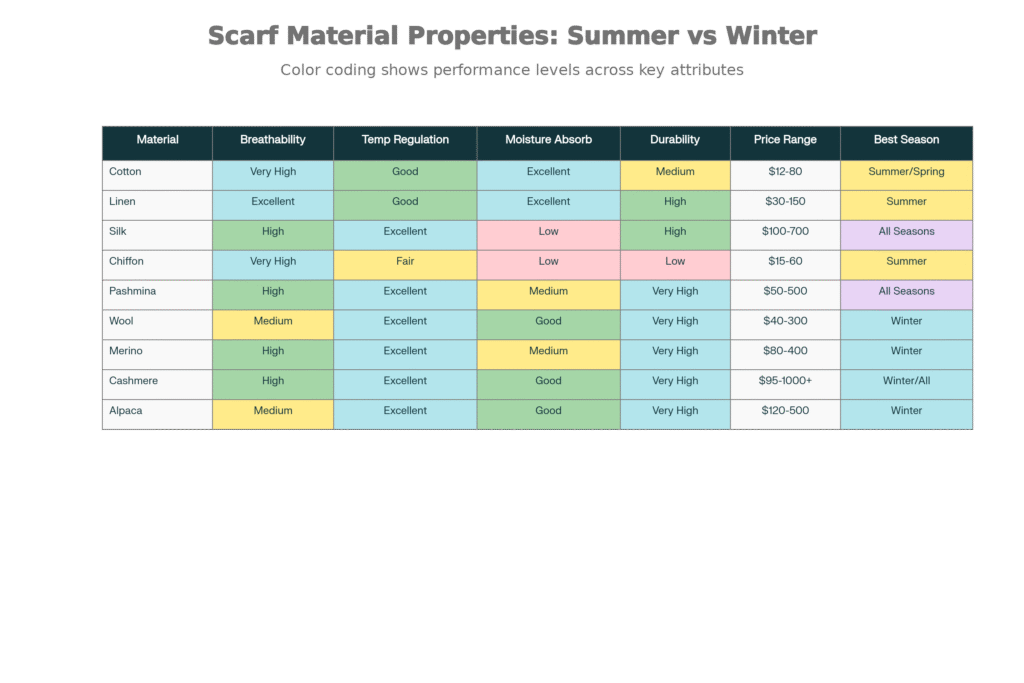
Comprehensive Scarf Material Properties: Summer vs Winter Comparison
Transitional Season Scarves: Spring and Autumn Balance
Temperature fluctuations during shoulder seasons demand materials balancing warmth and breathability—neither summer-appropriate nor winter-intensive.
Wool-Silk Blends
Premium wool-silk blends represent the ideal transitional choice, combining wool’s insulating properties with silk’s softness and lightweight structure. These blends maintain structure and comfort without excessive bulk, accommodating unpredictable temperature swings throughout the day.
Cotton-Wool Blends and Pashmina
Cotton-wool combinations balance cotton’s breathability with wool’s warmth, preventing overheating while providing necessary protection during cool mornings and evenings. Pashmina’s natural temperature-regulating characteristics allow year-round wear, automatically adjusting insulation based on ambient conditions. This versatility makes pashmina particularly valuable for your textile business, as single inventory pieces serve multiple seasonal demands.
Warmth vs Breathability: Scarf Material Performance Matrix
All-Season Scarves: Strategic Inventory Investment
Premium Cashmere and Pashmina
High-quality cashmere accommodates seasonal variation through styling adjustments—lightweight varieties work for summer with appropriate styling, while heavier knits provide winter warmth. Pashmina similarly adapts across seasons while maintaining professional appearance in diverse contexts.
For your wholesale business perspective, pashmina represents particularly attractive inventory opportunity. The ₹5,000-15,000 wholesale cost point ($60-180 USD) supports retail pricing of ₹25,000-1,00,000+ across international markets, creating exceptional margin potential. Hand-woven Kashmiri pieces command premium positioning, especially in luxury segments where scarcity and craftsmanship drive pricing power.
Choosing the best scarf for summer and winter comes down to fabric, weight, and comfort. In summer, opt for breathable, lightweight scarves like cotton or linen. In winter, go for warm, insulating options like wool, cashmere, or thick knits. The right scarf enhances your style and suits the season—keeping you cool in the heat and cozy in the cold.