French
  Deutsch
  Spanish
  الإمارات
  English
 Choosing the right scarf isn’t just about fabric or color—it’s about length. Ever worn a scarf that felt too short to style or so long it looked overwhelming? You’re not alone. Scarf length plays a huge role in comfort, warmth, style, and even how premium a scarf looks. Whether you’re buying for personal use, gifting, or sourcing scarves for retail or corporate orders, this guide will clear all confusion.
Let’s break it down simply, practically, and stylishly.
The standard scarf length ranges from 55 to 80 inches (140-203 cm) for adults, but the ideal length depends on multiple factors including the wearer’s height, how the scarf will be worn, and the specific scarf style. Understanding these dimensions is essential whether you’re manufacturing scarves for your textile business, purchasing for personal use, or sourcing wholesale inventory.
General Length Guidelines by Age and Gender
Adult Sizing
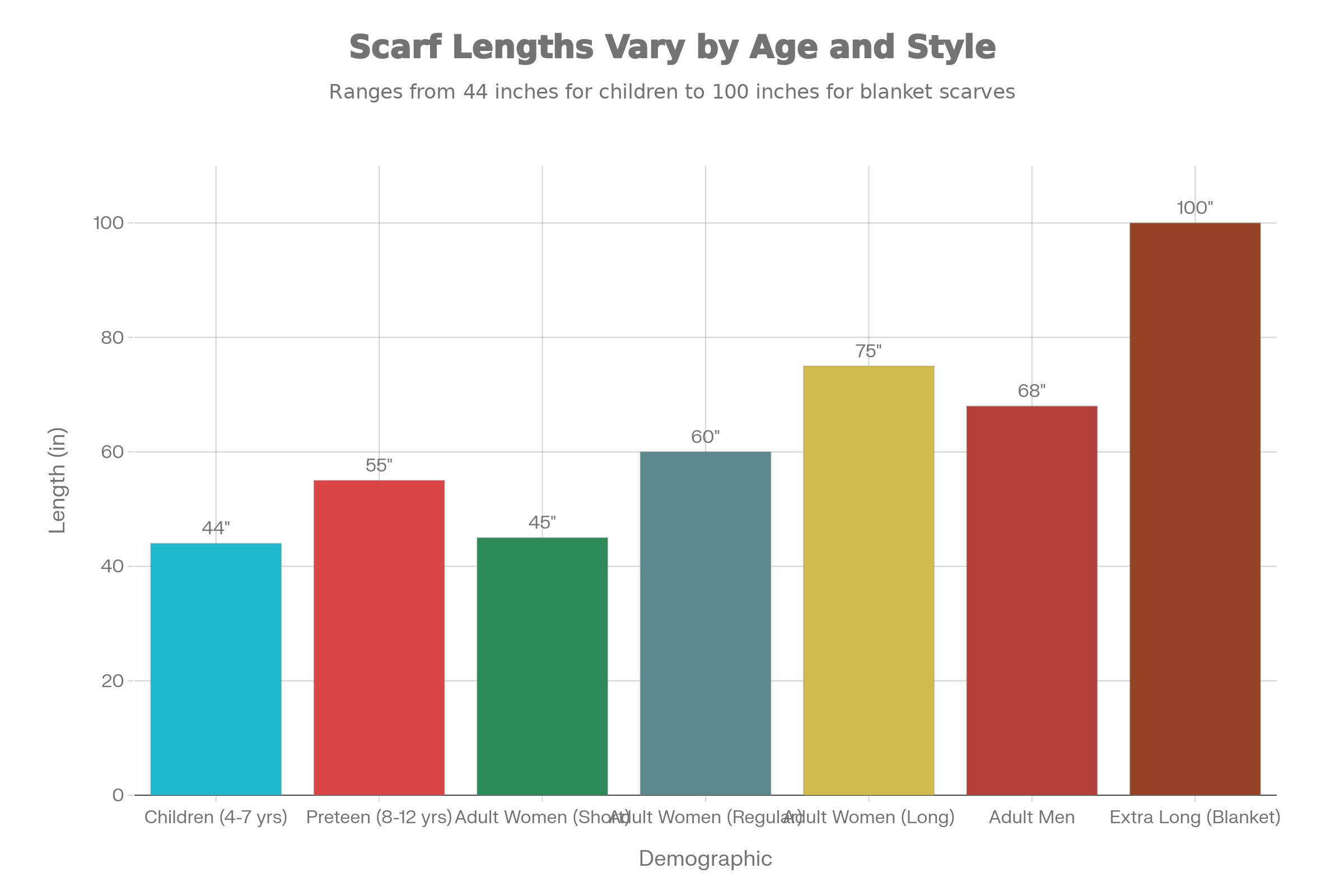
Women’s scarves typically measure 55-80 inches (140-203 cm) in length with widths of 6-12 inches (15-30 cm). The length variation accommodates different styling preferences—shorter scarves for casual single wraps, longer ones for multiple loops and complex styling options.
Men’s scarves follow a slightly different standard, ranging from 60-75 inches (152-190 cm) in length with widths of 6-10 inches (15-25 cm). Professional haberdashery standards traditionally define men’s scarves at a maximum of 72 inches, with width ranging from 7 inches (narrow) to 10 inches (broad). The slightly longer length accommodates wrapping around the neck and tucking inside coats or jackets.
Children and Youth
Sizing varies significantly by age. Young children (4-7 years) wear scarves measuring 36-44 inches (92-112 cm) long with 3-3.5 inch width, while older children (8-12 years) transition to 50-60 inches (127-152 cm) with 5-6 inch width. Preteen and teenage scarves reach adult proportions around 60-75 inches.
Standard Scarf Length Recommendations by Demographic Group
Body-Based Measurement Methods
Height-Proportional Sizing
The most widely accepted sizing principle across professional knitting, crochet, and textile communities is that scarf length should equal the wearer’s height. For a 6-foot-tall person, a 6-foot scarf would be appropriate. When draped around the neck with this measurement, the ends fall approximately to the hip level, creating balanced proportions. This guideline applies particularly well to relatively narrow scarves (6-9 inches wide) worn as decorative accessories or lightweight wraps.
Arm Span Method
An alternative measurement approach uses fingertip-to-fingertip arm span. The wearer extends their arms outward to the sides as if giving a hug, and the resulting measurement from fingertip to fingertip provides a natural scarf length. This method accounts for shoulder width and body proportions automatically, making it practical for custom sizing.
Hand-Based Width Measurement
For determining scarf width, measure from the tip of the middle finger to the wrist base, or alternatively, from pinky tip to thumb tip with the hand fully extended. This typically yields 6-8 inches for average adults, matching standard scarf widths.
Scarf Length by Style and Function
Scarf length requirements vary substantially based on intended use and design style.
Compact Styles (15-50 inches)
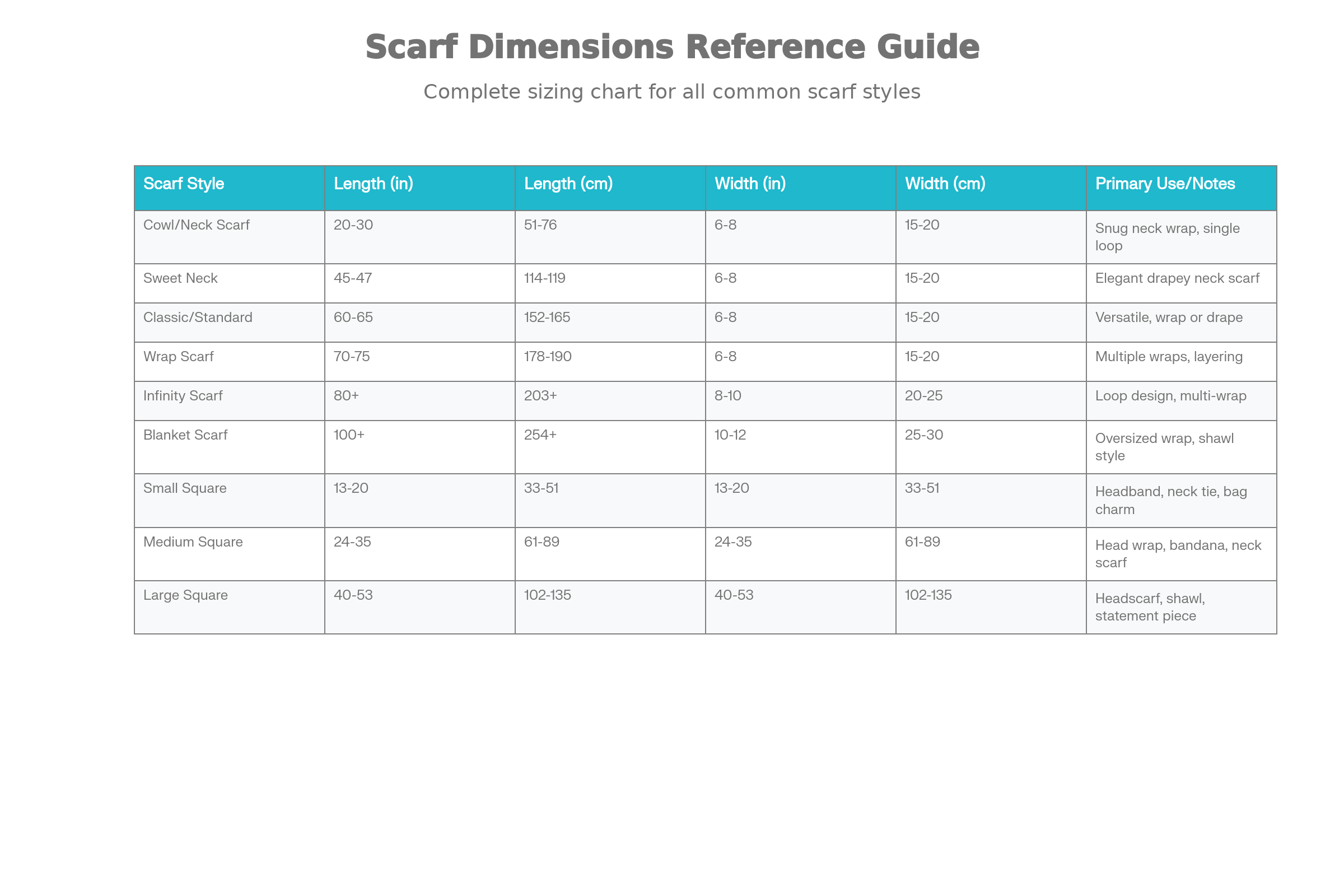
Cowl scarves, designed for a snug fit around the neck, measure approximately 20-30 inches, making them ideal for single wraps without excess bulk. Sweet neck scarves, which drape elegantly around the neck, span 45-47 inches. Ascot-style scarves (often pinned at the neck or shoulder) range from 40-50 inches.
Standard Versatile Scarves (60-70 inches)
The classic 60-inch scarf represents the most universally applicable length. At this measurement, the scarf can be wrapped around the neck once with visible draping, knotted, or looped depending on styling preference. This length provides sufficient material for versatile styling while maintaining manageable proportions. Many professional weaving publications standardize on 60-65 inches with 5-6 inch fringe.
Extended Wrapping Scarves (70-90 inches)

Wrap scarves measuring 70-75 inches accommodate multiple wraps around the neck and layering options. Infinity scarves, designed with an endless loop construction, typically measure 80 inches (203 cm), allowing for two or three wraps around the neck for enhanced warmth and visual impact.
Oversized Statement Pieces (100+ inches)
Blanket scarves exceeding 100 inches (254 cm) function as multi-purpose wraps suitable for shawl-style wearing, oversized shoulder draping, or even sarong-style wrapping. These pieces provide maximum styling flexibility and generous coverage.
Comprehensive Scarf Sizing Reference by Style Type
Material-Specific Dimensions
Square Silk Scarves
Silk scarves demonstrate particularly organized sizing standards. Small squares measure 13-20 inches, suitable for headbands, neck ties, and bag charms. Medium squares (24-35 inches) serve as versatile headwraps and bandanas. The 90×90 cm (35×35 inch) size is considered the gold standard for silk scarves, balancing versatility with elegant proportions. Large squares (40-53 inches) function as dramatic statement pieces, headscarves, and shawl-style wraps.
Long Rectangular Scarves
Traditional long silk scarves follow these standard dimensions:
- Classic rectangular: 153 cm x 43 cm (60″ x 17″)
- Long shawl styles: 28 x 80 inches to 30 x 90 inches
- Narrow scarves: 100 x 30 cm for more delicate styling
- Twilly/ribbon styles: 120 x 8 cm for minimalist neck styling
Traditional Knit/Crochet Scarves
Handmade and artisan scarves typically follow these proportions: 8-10 inches wide by 60-65 inches long with 5-6 inch fringe. Professional sources note that broader variations exist (56-84 inches in published patterns), but this middle range represents the industry standard.
Critical Factors Affecting Ideal Length
Wrapping Method
How the scarf is worn dramatically impacts required length. A scarf designed for draped wear around the neck requires different dimensions than one intended for multiple looped wraps or head covering. A 36-inch scarf can provide substantial warmth when draped around the neck and covered by a coat, while the same length proves impractical for looped or knotted styling.
Yarn or Material Weight
Heavier, bulkier materials require careful length consideration to avoid excessive bulk. Thin, lightweight yarns like silk or delicate cotton can accommodate additional length without appearing overwhelming. Conversely, thick cashmere or wool blends may necessitate reducing length to maintain visual proportion.
Stitch Pattern and Design
Knitting and crochet stitch patterns often require specific multiples of stitches and rows. Some complex motifs necessitate length adjustments to complete pattern repeats correctly. Additionally, stretchy stitch patterns (like lace) expand during blocking, potentially adding inches to final dimensions.
Personal Body Structure
Broad shoulders may benefit from slightly wider scarves for proportional balance. Similarly, very tall individuals naturally accommodate longer scarves better than petite wearers.
Manufacturing and Wholesale Standards
From a production perspective, the standard wholesale scarf measures approximately 60-70 inches long by 6-8 inches wide. This represents the optimal balance between using reasonable yarn quantities and providing sufficient versatility for diverse styling applications. Many manufacturers produce this size as their baseline offering, with longer and wider variants available as specialty options.