French
  Deutsch
  Spanish
  الإمارات
  English
 Scarves are more than just accessories. They’re comfort layers, fashion statements, and sometimes even emotional companions on cold mornings or breezy evenings. But here’s the thing most people overlook—the material of a scarf changes everything. From how it feels on your skin to how long it lasts, fabric choice is the real hero behind a great scarf.
In this guide, we’ll break down the best materials for scarves, using a clear, practical approach—and yes, we’ll also reference the scarf material comparison infographic you’ve created to make things visual and easy to understand.
Let’s dive in.
Why Scarf Material Matters More Than You Think
Ever worn a scarf that looked stunning but felt itchy or stiff? Or one that lost its charm after just a few washes? That’s the fabric talking.
The right scarf material:
- Enhances comfort
- Matches the season
- Complements your skin type
- Aligns with your budget
- Reflects quality and craftsmanship
Think of fabric like the foundation of a building. You can decorate all you want, but if the base isn’t solid, it won’t stand tall.
How to Choose the Right Scarf Fabric for Your Needs
Choosing the perfect scarf material depends on three simple questions:
- When will you wear it? (Winter, summer, all-season)
- Why will you wear it? (Fashion, warmth, gifting, travel)
- Who will wear it? (Sensitive skin, luxury buyers, everyday users)
Once you answer these, selecting the right material becomes much easier.
Understanding Key Scarf Material Attributes
Before we compare materials, let’s decode the attributes used in the infographic.
Softness Explained
Softness determines how gentle a scarf feels against your skin. Natural fibers like silk, cashmere, and pashmina score highest here.
Warmth vs Breathability
Warmth doesn’t always mean heavy. Cashmere and merino wool offer warmth without bulk, while cotton and linen shine in breathability.
Durability and Longevity
Durability defines how well a scarf holds up after repeated use and washing. Synthetic fibers and tightly woven natural fabrics score higher.
Ease of Care and Maintenance
Some scarves demand handwashing and baby-level care, while others are toss-and-go machine-friendly.
Affordability vs Luxury
Luxury materials feel amazing but cost more. Affordable materials offer practicality and mass appeal.
Hypoallergenic Properties
If skin sensitivity matters, materials like silk, cotton, linen, and vicos are safer bets.

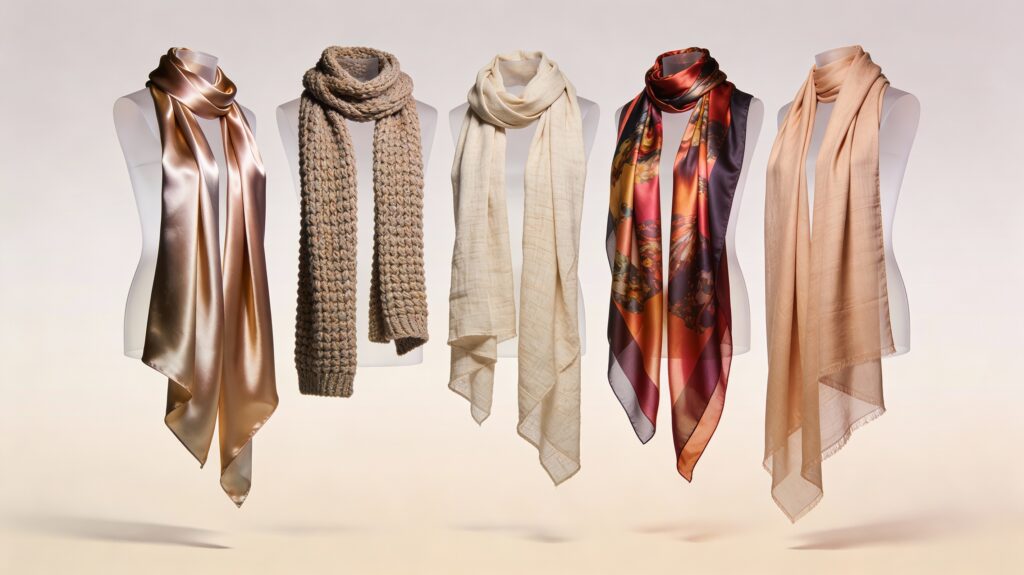
Scarf Material Comparison Overview (Based on Infographic)
How to Read the Scarf Material Comparison Chart
The infographic compares scarf materials across attributes like softness, warmth, breathability, durability, ease of care, affordability, and hypoallergenic nature—rated on a scale of 1 to 5.
What the Color Coding Represents
- Green = High performance
- Yellow = Moderate performance
- Red = Lower performance
This makes it easy to visually spot strengths and weaknesses at a glance.
Detailed Breakdown of the Best Scarf Materials
Silk Scarves
Silk scarves represent timeless luxury and refined elegance. Known for their ultra-smooth texture and natural sheen, they elevate any fashion collection instantly. Ideal for premium brands, silk offers excellent breathability, hypoallergenic benefits, and a graceful drape—perfect for high-end retail, gifting, and statement accessories.
Pros of Silk
- Exceptional softness
- Highly breathable
- Naturally hypoallergenic
- Ideal for formal and fashion-forward looks
Cons of Silk
- Expensive
- Requires delicate care
- Less warmth compared to wool
Best for: Luxury fashion, sensitive skin, warm climates
Cashmere Scarves
Cashmere scarves are synonymous with warmth, softness, and exclusivity. Lightweight yet highly insulating, they deliver superior comfort without bulk. For businesses targeting luxury consumers, cashmere adds strong perceived value, long-term wearability, and a premium touch that justifies higher price positioning.
Why Cashmere Is a Luxury Favorite
- Outstanding warmth-to-weight ratio
- Ultra-soft texture
- Timeless appeal
Watch out: It’s costly and requires gentle handling.
Pashmina Scarves
Pashmina scarves sit at the pinnacle of fine fibers. Exceptionally soft and warm, they are prized for craftsmanship and rarity. For premium boutiques and designer labels, pashmina communicates heritage, artistry, and exclusivity—making it ideal for limited collections and high-margin offerings.
- Extremely soft
- Excellent warmth
- Premium craftsmanship appeal
Perfect for high-end boutiques and gifting collections.
Merino Wool Scarves
Merino wool scarves combine performance with comfort. Finer than traditional wool, they provide warmth while remaining breathable and non-itchy. Businesses favor merino for winter collections because it balances durability, temperature regulation, and everyday luxury—appealing to both fashion and functional buyers.

- Warm yet breathable
- Durable
- Less itchy than regular wool
Ideal for winter wear and outdoor lifestyles.
Cotton Scarves
Cotton scarves are versatile, breathable, and widely loved. Easy to care for and cost-effective, they suit casual, summer, and everyday collections. For businesses, cotton enables scalable production, broad market appeal, and reliable demand across seasons without compromising comfort.
- Highly breathable
- Easy to maintain
- Suitable for all ages
Best for casual wear, summer scarves, and mass-market collections.
Linen Scarves
Linen scarves are ideal for warm climates and resort wear. Naturally breathable with a textured, organic feel, they convey effortless sophistication. Brands choose linen for eco-conscious collections, offering durability, natural aesthetics, and strong appeal to consumers seeking lightweight, sustainable fashion..
- Excellent airflow
- Natural texture
- Strong and long-lasting
It wrinkles easily but that’s part of its relaxed charm.
Viscose Scarves
Viscose scarves offer a silk-like look and soft drape at a more accessible price point. They are breathable, lightweight, and visually elegant, making them a smart choice for fashion brands seeking premium aesthetics with controlled costs. Ideal for trend-driven and high-volume collections.
- Soft and smooth
- Good drape
- Budget-friendly
A popular choice for fashion brands balancing cost and aesthetics.
Polyester Scarves
Polyester scarves are highly durable, wrinkle-resistant, and easy to maintain. For businesses, they are perfect for large-scale production, promotional use, and consistent quality. Polyester holds color well, supports complex prints, and delivers excellent value for mass-market and corporate applications.
- Extremely durable
- Easy care
- Affordable
It lacks breathability but wins in performance and pricing.
Acrylic Scarves
Acrylic scarves provide wool-like warmth while remaining lightweight and affordable. They are popular in winter collections where cost efficiency and ease of care matter. For brands, acrylic enables competitive pricing, fast production, and reliable performance in budget-friendly and entry-level product lines..
- Lightweight warmth
- Affordable
- Easy to clean
However, it’s less breathable and may irritate sensitive skin.
Best Scarf Materials by Use Case
Best Material for Winter Scarves
Cashmere, pashmina, and merino wool
Best Material for Summer Scarves
Cotton, linen, silk
Best Material for Sensitive Skin
Silk, cotton, viscose
Best Material for Budget Buyers
Polyester, acrylic, viscose
Best Material for Luxury Fashion Brands
Silk, cashmere, pashmina
Natural vs Synthetic Scarf Materials
Sustainability Considerations
Natural fibers are biodegradable and eco-friendly, while synthetics offer durability and lower production costs.
Performance Comparison
Natural fibers excel in comfort and breathability. Synthetic fibers dominate in durability and ease of care.
The smart choice? Often a blend of both.
Common Myths About Scarf Fabrics
- Expensive always means better – Not always. It depends on usage.
- Synthetic scarves are low quality – Modern synthetics can perform exceptionally well.
- All wool is itchy – Merino proves otherwise.
How Fashion Brands and Buyers Use This Comparison
Brands use material comparisons to:
- Design seasonal collections
- Target specific markets
- Optimize pricing strategies
- Educate customers visually using infographics like yours
This infographic works as both a sales tool and an educational asset.
Conclusion
Choosing the best material for scarves isn’t about picking the most expensive fabric—it’s about selecting the right fabric for the right purpose. Whether it’s silk for elegance, cashmere for warmth, cotton for comfort, or polyester for practicality, every material has its moment.